
Deep Cleaning Mastery: How to Completely Remove Dried Blood Stains from a Bedspread
Dried blood stains aren’t just ordinary dirt. Learn about changes in blood proteins and pigments, common cleaning mistakes to avoid, and stain-removal techniques for premium bed covers in Surabaya.
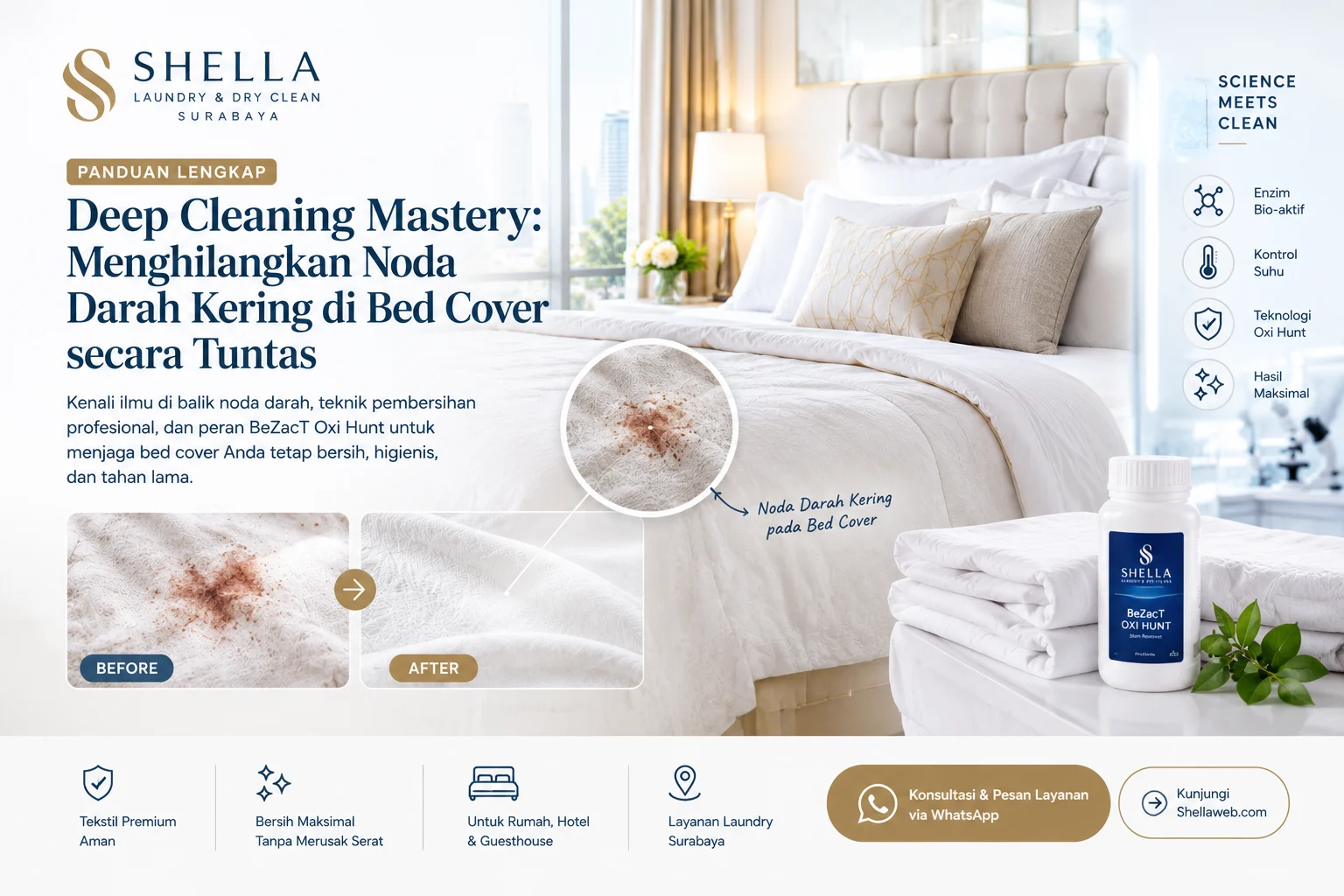
Dried blood stains on bedspreads can be particularly challenging to remove, especially when they’re on premium cotton, patterned fabrics, microfiber, or textiles with decorative finishes. Once dry, the stains may appear as reddish-brown marks that are difficult to remove through regular washing.
For homeowners, guesthouse operators, and hotels in Surabaya, improper handling can increase the risk of discoloration, fiber damage, or stains that become increasingly difficult to remove. That is why dried blood stain on the bedspread It should be treated as a matter of chemistry and textile care, not simply a matter of adding more detergent.
This guide explains the scientific principles behind it and how professional services such as Professional Laundry & Dry Cleaning Services in Surabaya can help determine the method best suited to the material and the nature of the stain.
Why Are Dried Blood Stains Hard to Clean?
Blood contains water, blood cells, proteins, and hemoglobin—a protein in red blood cells that carries oxygen. When blood is still fresh, some of its components can still be easily removed from the surface of fabric with proper handling. As it dries, the water evaporates and residue remains trapped between the fibers.
Coagulation and protein residues
The blood clotting process involves a series of biological reactions that form a fibrin network. In dried stains, protein residues and blood components can adhere to the surface and the gaps between the fibers. This does not mean that all fabric stains undergo the same coagulation process as blood inside the body.
Hemoglobin and color changes
Hemoglobin can undergo chemical changes when exposed to oxygen and environmental conditions. Changes in the oxidation state of the iron in hemoglobin, including the formation of methemoglobin, can affect its color. The resulting brown color does not always indicate a single compound.
Penetration into the fabric
Blood can seep through the fabric’s weave and construction. In bed covers that are quilted or padded, residue may not be limited to the surface. Rubbing too hard can spread the stain and damage the fabric’s texture.
Heat and Chemical Hazards
Heat can denature proteins and potentially make residues harder to remove. Oxidizing agents can also affect certain dyes and fibers. Therefore, temperature, pH, contact time, and fabric compatibility must all be considered together.
To understand the biological context, see the explanation hemoglobin and the process blood clotting. These two references explain the general biology of blood; neither serves as proof that a particular cleaning product will definitely work on all types of stains.
The Chemical Trap / Molecular Lock: When Stains Dry
Fresh bloodstains and dried bloodstains are not the same thing. As the liquid dries, the water that previously helped the stain’s components move around is reduced. Proteins and pigments remain on the fibers, while chemical changes can alter the stain’s color and how it responds to washing.
The term “molecular lock” in this article is a metaphor used to explain why old stains can be harder to remove—it is not the name of a single chemical reaction. In reality, the degree of difficulty depends on the age of the stain, the composition of the blood, the type of fabric, the fabric’s dye, the temperature it was previously exposed to, and the cleaning agents that have already been used.
The Role of Oxidation and Protein Denaturation
Hemoglobin can undergo changes through oxidation reactions, including the partial conversion of hemoglobin to methemoglobin. On the other hand, proteins can denature due to conditions such as heat or chemical changes. However, these changes do not mean that stains are always impossible to remove; the outcome depends on the condition of the fabric and the treatment applied.
Active oxygen-based products can help break down certain chromophores in stains through oxidation. Their effectiveness varies depending on the stain, and improper use may cause colors to fade or damage the fabric. Do not assume that all “oxi” formulas have the same concentration, pH, or usage instructions.
For material inspection and targeted handling, learn Premium bedspread cleaning service. If the bedspread is made of a delicate fabric, is a dark color, has embroidery, or has a special coating, please let us know before we begin.
Video: Watch How to Remove Stains
The following video can help provide a visual guide to stain removal. Be sure to adapt each technique to the care label and the fabric’s characteristics; a demonstration on one material does not necessarily apply to all bed covers.
If the video does not appear on your device, go to this YouTube Shorts video.
A 4-Step Protocol for Removing Dried Blood Stains from Bed Covers
Professional protocols do not always mean following the same four-step sequence for every item. The actual steps should be based on the inspection results, the type of fabric, colorfastness, care labels, and instructions for using chemicals. Here is a four-step framework that explains the purpose of each process, without assuming that heat is suitable for all stains.
Inspection, Controlled Wetting, and Softening
Identify the material, layers, color, and age of the stain. For washable fabrics, initial treatment typically involves using cold or cool water and controlled wetting to help loosen the residue. Avoid aggressive scrubbing.
What about Steam? Hot steam is not the first step in treating blood stains. Steam is only used as a finishing touch after the stain has been treated and the fabric has been determined to be heat-safe.
Targeted Use of the BeZacT Oxi Hunt App
BeZacT Oxi Hunt is part of the SHELLA stain removal system. When treating blood stains, follow the product label instructions, perform colorfastness testing, and assess fiber compatibility.
Oxidizing agents can help remove certain organic stains, but it should not be assumed that they are always safe for all fabrics or that they will definitely remove stains completely. Use only as directed on the product label.
Washing, Rinsing, and Residue Control
After pretreatment, proceed with a wash cycle appropriate for the fabric type. A compatible detergent helps remove residue from the fibers, while thorough rinsing helps remove any remaining dirt and fabric care products.
BeZacT Powder should be considered only if the specific variant and usage instructions are suitable for the process and materials in question. Do not assume that automatic detergent powder automatically neutralizes the pH, and do not mix the product without following the manufacturer’s instructions.
Extraction, Controlled Drying, and Final Inspection
Excess moisture can be reduced through proper extraction and drying with controlled air circulation. Compressor equipment should only be used if it is specifically designed for this purpose and is safe for the fabric.
Check the stained area before using heat for drying or finishing. If the stain is still visible, reevaluate the process before heat makes it more difficult to remove.
Do-It-Yourself Laundry vs. Professional Laundry Services
Washing at home may be sufficient for light stains on washable fabrics. However, large, layered, high-value bed covers, or those with old stains require extra attention to liquid penetration, the rinsing process, and even drying.
| Aspect | Home Laundry | Shella Laundry Scientific Protocol |
|---|---|---|
| Fabric safety | It depends on the temperature setting, detergent, machine capacity, and understanding of the care labels. | Focus on material inspection, testing hidden areas when necessary, and selecting methods based on the condition of the item. |
| Stain Removal | The normal wash cycle may not be effective enough for protein stains that have set in or have been exposed to heat. | The process may include targeted pretreatment, material-specific washing, inspection of results, and re-evaluation if necessary. |
| Residue control | Rinse results depend on the load size and the selected program. | The process is designed to accommodate the rinsing and drying needs of large items. |
| Hygiene | It is affected by detergent, temperature, duration, rinsing, and drying. | Cleaning and finishing methods are selected based on the material and specific requirements; sanitation results should not be assumed without a validated process. |
| Risk of permanent staining | It increases if the stain is scrubbed vigorously or exposed to direct heat before being examined. | Risks are mitigated through process inspection and control, although not all stains can be completely removed. |
This table compares general approaches; it does not represent laboratory test results or a guarantee that one method is always superior. Success rates should be evaluated based on the actual fabric and stain conditions.
Mistakes to Avoid When Removing Blood Stains
Don't use hot water right away
Start with cold or cool water on fabrics that are safe to wash. Heat can alter proteins and make stain removal more difficult.
Don't scrub too hard
Excessive friction can damage the fabric's surface, cause the fibers to fuzz, or spread the stain.
Do not mix chemicals
Use each product according to the instructions. Do not mix oxidizers, chlorine bleach, acids, or ammonia.
Do not dry before inspection
Check to see if any shadow marks remain before using a heat dryer or iron.
Tips for Hotel and Guesthouse Owners in Surabaya
For hotels and guesthouses, linen handling should be part of a consistent workflow. Separate stained linens from regular linens in accordance with hygiene procedures, wear gloves when handling linens contaminated with blood, avoid shaking out the linens, and follow the establishment’s safety and linen management policies.
Note the type of fabric, the location of the stain, the estimated age of the stain, and the steps already taken. This information helps the laundry team choose a more appropriate process and avoid repeated use of chemicals without proper evaluation.
For household and business linen needs, explore Professional Laundry & Dry Cleaning Services in Surabaya and check the condition of the bedspread before the process begins.
Bloodstains on Your Bedspread? Start with the Right Inspection.
Don’t take any risks with high heat or chemicals that haven’t been tested on your fabric. Please tell us the type of fabric, the size of the bedspread, how old the stain is, and whether the fabric has been washed before. The team at Shella Laundry & Dry Clean Surabaya can help you evaluate the appropriate care options.
Shella Laundry & Dry Clean Surabaya · Nginden VI B No. 1B, Surabaya
Frequently Asked Questions About Dried Blood Stains on Bed Covers
Can dried blood stains on a bedspread still be removed?
Many stains can still be treated, but the results depend on the age of the stain, the type of fabric, the color, the condition of the fibers, and the care history. Stains that are old or have been exposed to heat may be more difficult to remove. No method guarantees that all stains will be completely removed.
Is hot water effective for removing blood stains?
Hot water is not the recommended first choice for blood stains, as heat can denature proteins and potentially make the stain harder to remove. For washable fabrics, initial treatment usually begins with cold or cool water and a check of the care label.
Is BeZacT Oxi Hunt suitable for all bed covers?
Do not assume that a single product is suitable for all fabrics and dyes. Compatibility must be determined based on the product label, the manufacturer’s instructions, and colorfastness testing. For delicate fabrics, embroidery, or fabrics with special coatings, consult the manufacturer first.
Is steam necessary for cleaning blood stains?
No. Steaming is not a required step for blood stains and should not be used as an initial treatment. Steaming should only be considered as a finishing step once the stain has been treated and the fabric has been determined to be suitable for heat exposure.
How do I find the nearest bed cover laundry service in Surabaya?
Check whether the service provider specializes in home textiles, inspects fabrics and stains, realistically explains the risks, and has appropriate rinsing and drying processes. You can start by contacting Shella Laundry for a consultation on the condition of your bedspread.
Can blood stains always be removed 100%?
No. The final result is influenced by the age of the stain, chemical changes, fiber type, dyes, and prior treatments. A realistic goal is to reduce the stain as much as possible while preserving the fabric’s integrity.