
How to Clean Shoes Safely: A Materials Science Guide for Premium Sneakers
Shoes that look the same may not necessarily have the same construction. Suede, nubuck, leather, canvas, mesh, and knit respond differently to water, friction, cleaning agents, and heat. Understanding these responses helps reduce the risk of color fading, surface damage, yellowing soles, and weakened adhesives.
This SHELLA Laundry Surabaya guide covers the principles of shoe care based on material, ranging from light cleaning to cases requiring professional evaluation.
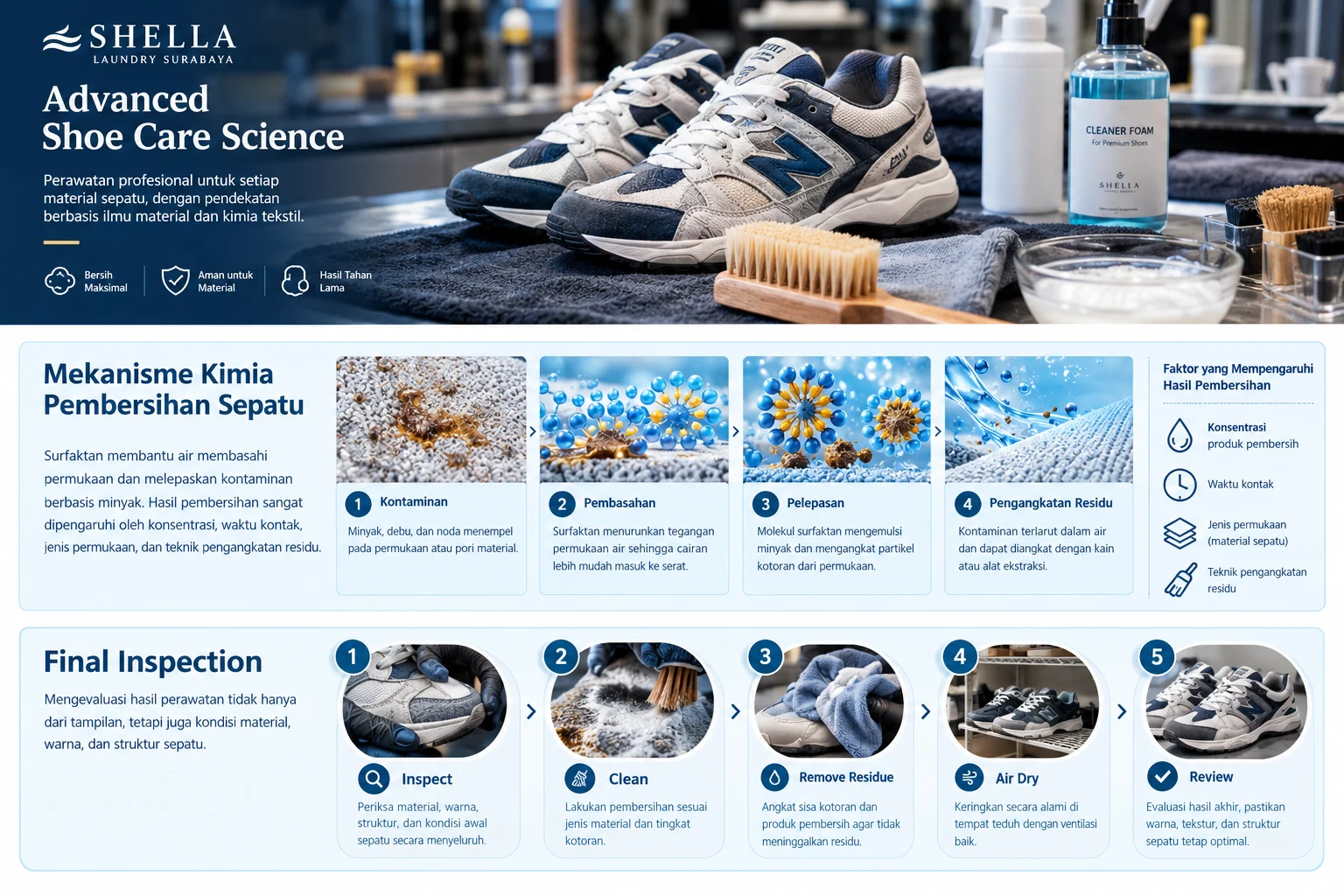
What Is Science-Based Shoe Cleaning?
Material-science-based shoe cleaning is the process of selecting techniques, products, moisture levels, and the degree of mechanical action based on the composition and construction of the shoes. The goal is not merely to make the shoes look clean, but to remove dirt while minimizing the risk of damage to the surface, color, shape, and seams.
A pair of sneakers can have several layers at once: a knit textile upper, synthetic leather panels, a protective layer, internal foam, a polymer midsole, and adhesive at the seams. A liquid that is suitable for a mesh panel may not necessarily be suitable for the suede or coated leather next to it.
Surface Contaminants
Dust, dry dirt, mud, skin oils, food residue, and road debris can stick to the surface or get trapped in the fabric’s fibers.
Materials and Construction
Porosity, fiber type, dyes, finishing coatings, foam, and adhesive systems determine the acceptable treatment limits.
Cleaning Process
Success depends on the suitability of the cleaning agent, contact time, liquid volume, mechanical action, and drying method.
Realistic Results
The goal is to remove dirt without making the condition worse. Permanent stains, oxidative damage, and worn-out coatings may not be fully restorable.
How Can You Clean Your Shoes More Safely?
Start with the gentlest method. Don’t immediately wet the shoes or scrub the stain vigorously. Identify the material, remove any dry dirt, and then determine whether spot cleaning is sufficient or if more specialized treatment is needed.
Dry Brush
Remove dust and dry dirt with a brush appropriate for the material. Do not repeatedly rub coarse particles against the surface.
Apply Foam
Use a cleaning foam that is suitable for the material and apply the minimum amount. Test it on a hidden area first, if possible.
Controlled Treatment
Work slowly under controlled humidity conditions. Steam should only be used when construction, finishing, and maintenance guidelines permit it.
Microfiber Wipe
Remove dirt and residue with a clean microfiber cloth. Let it air dry in a shaded, well-ventilated area.
Basic procedures before getting started
- Check the care label and the manufacturer's instructions, if available.
- Identify each panel of material, including any coated or painted sections.
- Remove the laces and the removable insole.
- Use a dry brush to remove loose dirt.
- Check for discoloration, cracks, peeling, and joints that are starting to come apart.
- Perform a compatibility test in an inconspicuous area using the appropriate product.
- Use a small amount of the product and avoid soaking the shoes.
- Remove any residue and let the shoes air dry before wearing them again.
Care Guide Based on Shoe Material
Appearances aren’t always indicative of the actual composition. Knit fabrics may have a coating, synthetic leather may have a thin polymer layer, and premium sneakers often combine multiple materials. Choose a cleaning method based on the most delicate part, not just the dirtiest one.
| Materials | Key Risks | Initial Approach | Things to Avoid |
|---|---|---|---|
| Suede | Changes in nap, water stains, dye migration | A suede brush and a special suede stain remover | Soaking, alcohol, vigorous scrubbing, direct heat |
| Nubuck | The fine, fuzzy surface becomes smooth, with spots and uneven coloring | Specialized brushes and products designed for nubuck | Untested solvents, regular skin cream, excess liquid |
| Knit / Mesh | Fibers are pulled, dirt gets into the pores, detergent residue | Soft brushes and compatible fabric cleaners | A stiff brush, high pressure, soak the entire shoe |
| Primeknit / Flyknit | Knitting distortion, fuzzy fibers, compromised coating | A gentle technique and as little fluid as possible | Repeated rubbing at a single point and high heat |
| Genuine leather | Dull finish, loss of flexibility, discoloration | A soft cloth and a skin-specific cleaner appropriate for the finish | Alcohol, bleach, degreaser, soaking |
| Synthetic leather | The polymer coating peels off, cracks, or becomes sticky | A slightly damp microfiber cloth and a compatible cleaning solution | Solvents, abrasives, excessive heat |
| Canvas | Color fading, water stains, shrinkage, or distortion | Gently brush and spot-clean with a suitable textile cleaner | Strong alkali, prolonged soaking, intense drying |
| Multi-material sneakers | Color transfer between panels and the response of different materials | Separate treatment for each panel and joint protection | One chemical mixture for all surfaces |
Why Do Surfactants, Detergents, and pH Need to Be Controlled?
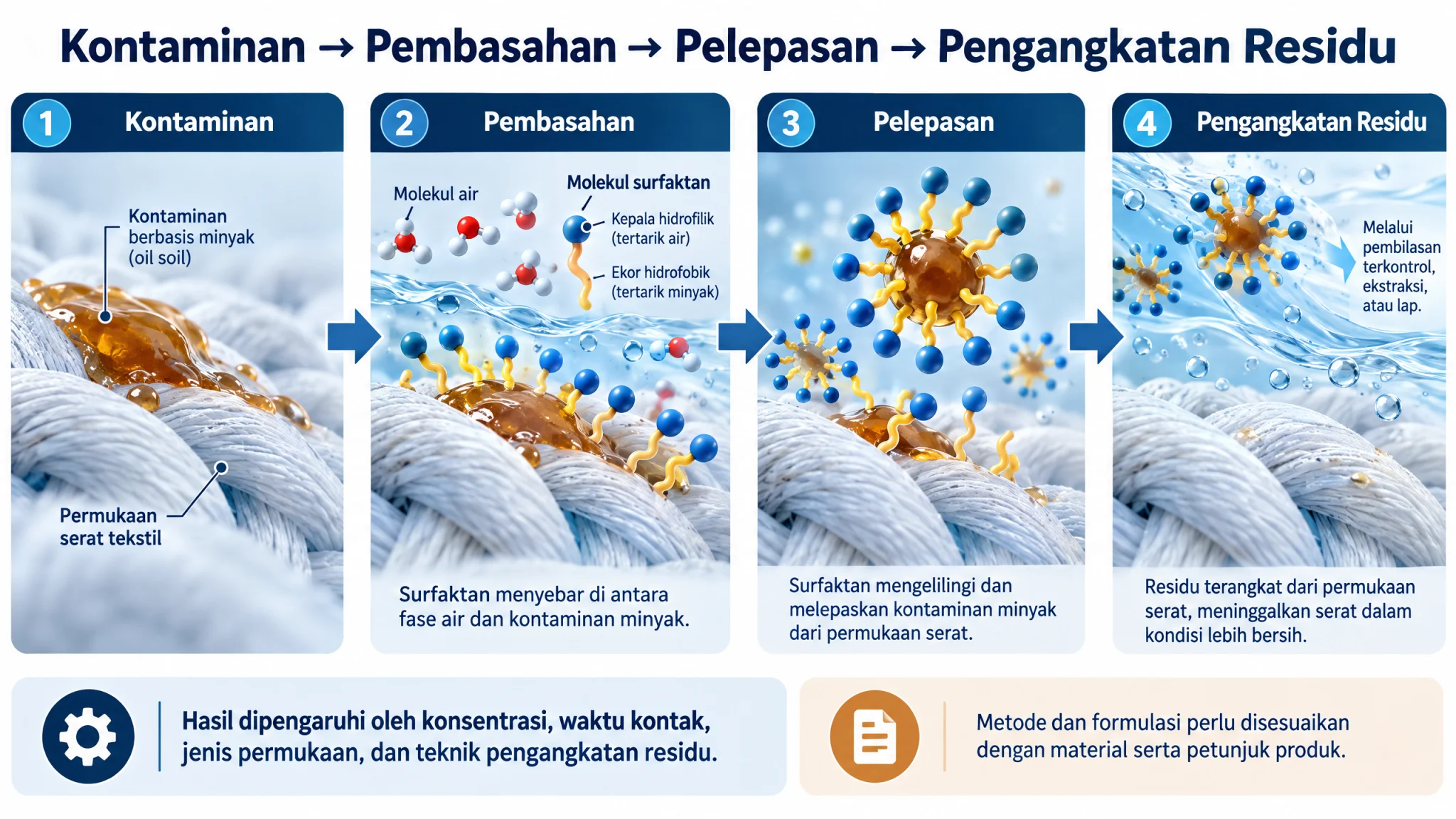
Surfactant It helps water wet the surface and remove some of the dirt. Surfactant molecules have a part that interacts with water and a part that interacts with oil. At the appropriate concentration and under the right conditions, this mechanism helps lift contaminants and trap them in the liquid so they can be wiped away.
However, more foam or stronger degreasing power does not automatically result in better shoe cleaning. An unsuitable formulation can leave residue, interfere with certain finishes, or increase the risk of discoloration.
Inappropriate Household Cleaners
- Degreasing products can remove surface components that are necessary for certain leather finishes.
- Any residue left behind can attract new dirt or alter the taste of the surface.
- An unknown pH and composition may increase the risk of changes in the color or coating.
- Repeated cleaning with vigorous scrubbing can accelerate textile wear and damage to thin coatings.
- Excess water can seep into the joints and increase the risk of problems in parts of the adhesive system.
Material-Based Approach
- Choose a cleaner designed for the target material.
- Use the minimum effective dose, not as much of the product as possible.
- Consider pH, color compatibility, contact time, and the need for rinsing or residue removal.
- Use gentle mechanical action to avoid damaging the fibers or the finish.
- Limit the penetration of liquid into the internal foam and the shoe’s seams.
Does dish soap always damage shoes?
It is not accurate to say that all dish soap will definitely damage every pair of shoes. Formulation They vary, as do the materials and finishes of the shoes. However, this product is designed for washing tableware and is not intended to ensure compatibility with suede, nubuck, coated leather, textile dyes, or shoe adhesives.
Therefore, concentrated dish soap, heavy-duty laundry detergent, bleach, and household degreasers are not the best first choices for premium sneakers. Use a cleaner specifically designed for the material and follow the manufacturer’s instructions.
Can surfactant residue damage glue?
The risk depends on the cleaner’s formulation, the amount of water, the duration of exposure, the temperature, and the type of adhesive. Many shoes use different adhesive systems for the upper, midsole, and outsole. Moisture penetrating the joints, combined with heat or exposure to incompatible chemicals, can contribute to the failure of certain joints.
However, it is not true that every surfactant residue directly breaks all adhesive bonds. The damage must be assessed based on the actual material and construction. If the outsole has already come apart, do not try to fix it with additional washing.
Steam vs. Water: Is Steam Cleaning Always Better?
Steam is a method that can be helpful for certain applications, but it is not a universal solution for all shoes. Its benefits and risks depend on the surface temperature, the distance from the tool, the duration of exposure, humidity conditions, and the durability of the finish and adhesives.
Potential for Controlled Steam Gains
- In certain systems, it can help break down some contaminants.
- It can reduce the need to pour large amounts of liquid.
- May assist with certain treatment processes if the material guidelines permit.
- With the right techniques and equipment, the exposure can be directed at specific areas.
Risks That Must Be Managed
- High temperatures can alter the finish, synthetic coating, or shape of sensitive materials.
- Heat and humidity can affect some adhesive systems.
- Steam does not automatically remove all types of stains or chemical residues.
- Just because the surface feels dry doesn't necessarily mean the foam inside has dried out.
Relevant thermodynamic principles
Water and steam transfer heat through different mechanisms. Steam that condenses on a surface releases thermal energy, so this process can quickly affect the temperature of a material. This is useful in some applications, but it can also increase the risk to heat-sensitive materials.
Heat can reduce the viscosity of some types of oils or fats, but not all stains will emulsify or be removed by steam alone. Oxidized contaminants, migrated dyes, and polymer residues may require a different approach.
Drying time also cannot be guaranteed to be faster after steam treatment. Drying is determined by the amount of water absorbed, temperature, humidity, airflow, and the material’s ability to retain moisture. Therefore, steam should be used only when it is in accordance with the specifications of the material and equipment.
Color Fading, Dye Migration, and the Dangers of Excess Alkali
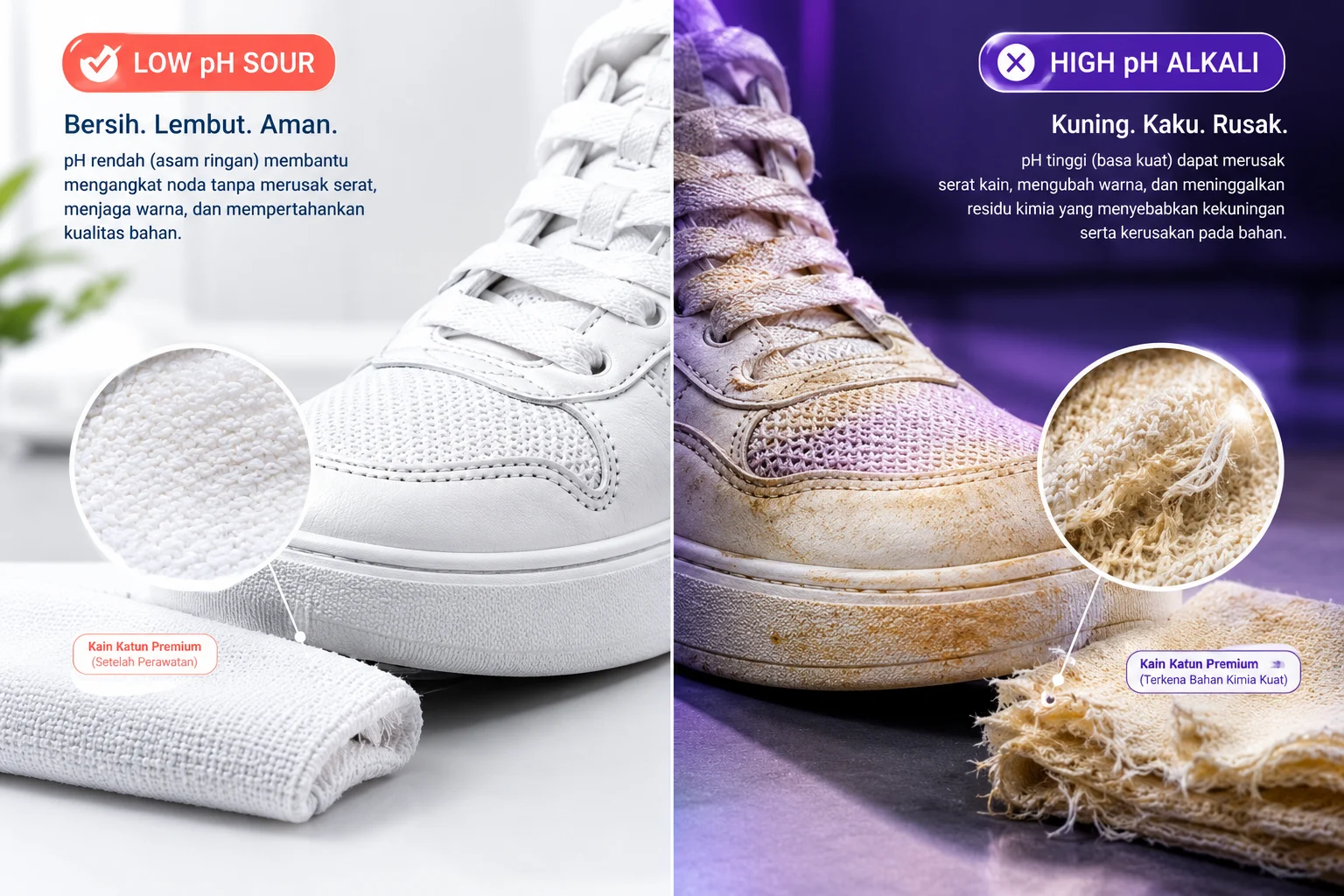
Dye running is the migration of dye from its original area to another area. On multi-material sneakers, dye from dark panels can migrate to the white mesh, stitching, midsole, or light-colored panels when the dye dissolves or is carried by moisture.
These risks depend on the type of dye, the method of application, colorfastness, temperature, pH, type of solvent, and duration of contact. Not all dyes are water-soluble, and not all alkaline conditions will cause color bleeding. However, materials with low colorfastness may react poorly to improper treatment.
Why is it important to monitor pH?
pH indicates the acidity or alkalinity of a solution. Solutions that are too alkaline can affect certain dyes, finishes, and materials. Genuine leather can also be sensitive to chemical conditions that alter the balance of its components or its finish.
The actual effect depends on the chemical composition of the material. Therefore, no single pH value automatically guarantees that all products are safe for every type of shoe. A “pH-neutral” label alone does not prove compatibility with all dyes, adhesives, or coatings.
Signs that the process must be stopped immediately
- The white cloth or microfiber cloth begins to pick up color from the surface of the shoes.
- The dark color appears to spread toward the light panel.
- The surface becomes sticky, bubbly, cracked, or peeling.
- The suede's texture changes drastically, or the knit fibers begin to pull apart.
- The seams on the outsole began to come apart after being exposed to moisture.
Do not attempt to correct color transfer by spontaneously adding alkali, bleach, alcohol, or heat. This action could cause further damage. Gently blot up any excess liquid with a clean cloth, and have the material inspected if the discoloration persists.
Papaya Soap and 70% Alcohol: Safe or Risky for Shoes?
Papaya soap and 70% alcohol are sometimes discussed as alternative cleaning agents. However, neither should be considered a universal shoe cleaner. Safety depends on the product’s composition, the shoe material, the type of dye, the finish, and the adhesive construction.
Further explanation of the steps and risks discussed in the video above...
Papaya Soap
A soap’s name does not fully describe its formula. The product may contain surfactants, fragrances, dyes, pH adjusters, moisturizers, and other ingredients.
- The pH and surfactant concentration may not be suitable for sensitive skin or fabrics.
- Residue may remain if the product does not come off the surface easily.
- Additional components may affect certain colors or finishes.
- Claims that a product is made from natural ingredients do not automatically prove the materials' compatibility.
70% Alcohol
Alcohol is a solvent that can affect a number of contaminants, but it can also interact with certain dyes, coatings, inks, and finishes.
- May alter the appearance of some layers or colors.
- Not recommended for use on suede and nubuck.
- May affect some synthetic materials and decorative coatings.
- Alcohol vapors are flammable; keep away from flames, sparks, and heat sources.
If you want to perform a compatibility test
- Check the manufacturer's care instructions first.
- Do not test homemade mixtures whose composition and compatibility are unknown.
- Use only products that are specifically designed for that material.
- Test on a small, inconspicuous area, applying the product as directed.
- Check for any discoloration, changes in sheen, texture, or stickiness.
- Do not continue if there are any adverse changes, even if the stain has not yet disappeared.
Testing in a hidden area can reduce uncertainty, but it does not guarantee that all shoes will react the same way. Different seams, panels, and layers may exhibit different responses.
Yellowing Soles and Persistent Shoe Odor Require Different Diagnoses
What causes shoe soles to turn yellow?
Discoloration of the white midsole can result from several processes, including material aging, exposure to light and oxygen, changes in polymers or additives, contamination, and chemical reactions on the surface. The cause cannot be determined based solely on the yellow color.
Therefore, removing surface dirt is different from restoring materials that have undergone chemical changes. Regular cleaning can help remove contaminants, but it may not necessarily restore the original color of a midsole that has aged or oxidized.
Why does shoe odor linger?
Odors can be caused by sweat, trapped moisture, compounds produced by microorganisms, and contaminants in the insole or foam padding. Spraying the outside with deodorizer doesn’t always address the source of the odor.
When handling the shoes, it is important to consider whether the insoles can be removed, how deeply moisture has penetrated, and whether the internal materials can be cleaned and dried without being damaged. Cleaning should not be claimed to sterilize the shoes or eliminate all microorganisms without processes and testing to support such claims.
When is routine cleaning sufficient?
- Dust and dry soil.
- Light surface stains that have not yet set in.
- Contaminants on the identified material.
- A mild odor that dissipates after ventilation and drying.
When is special care needed?
- The sole has turned yellow even though the surface is clean.
- The odor persists even after the shoes have been dried properly.
- The color fades or bleeds from one panel to another.
- Premium suede has oil stains or changes in texture.
- The midsole has come loose, the lining has peeled off, or the adhesive has weakened.
Where Can I Get My Shoes Cleaned in Surabaya?
If you're looking for Shoe Care in Surabaya, choose a provider who can explain the shoe materials, the methods used, the limitations of the process, and any risks that may arise. For premium sneakers, clarity about the procedures is more important than a promise that all stains will definitely be removed.
SHELLA Laundry Surabaya This can serve as a starting point for discussing shoe care options and assessing your needs. Before handing over high-value shoes, describe the type of stains, your history of using cleaning products, any discoloration, and the condition of any visible glue or coatings.
Questions You Should Ask
- Will the materials and finishes of the shoes be inspected before production?
- How is the risk of color fading tested and managed?
- Does the process involve water, foam, a solvent, or steam?
- How are internal moisture and drying handled?
- Can the service handle cases of oxidation, heavy staining, or structural damage?
- What are the realistic outcomes and the risks that remain after the evaluation?
The Best Ways to Care for Sneakers and Premium Shoes
The best method isn’t the most aggressive, the hottest, or the one that produces the most foam. The best method is the one that’s suited to the material, involves minimal intervention, removes residue properly, and doesn’t worsen the condition of the shoes.
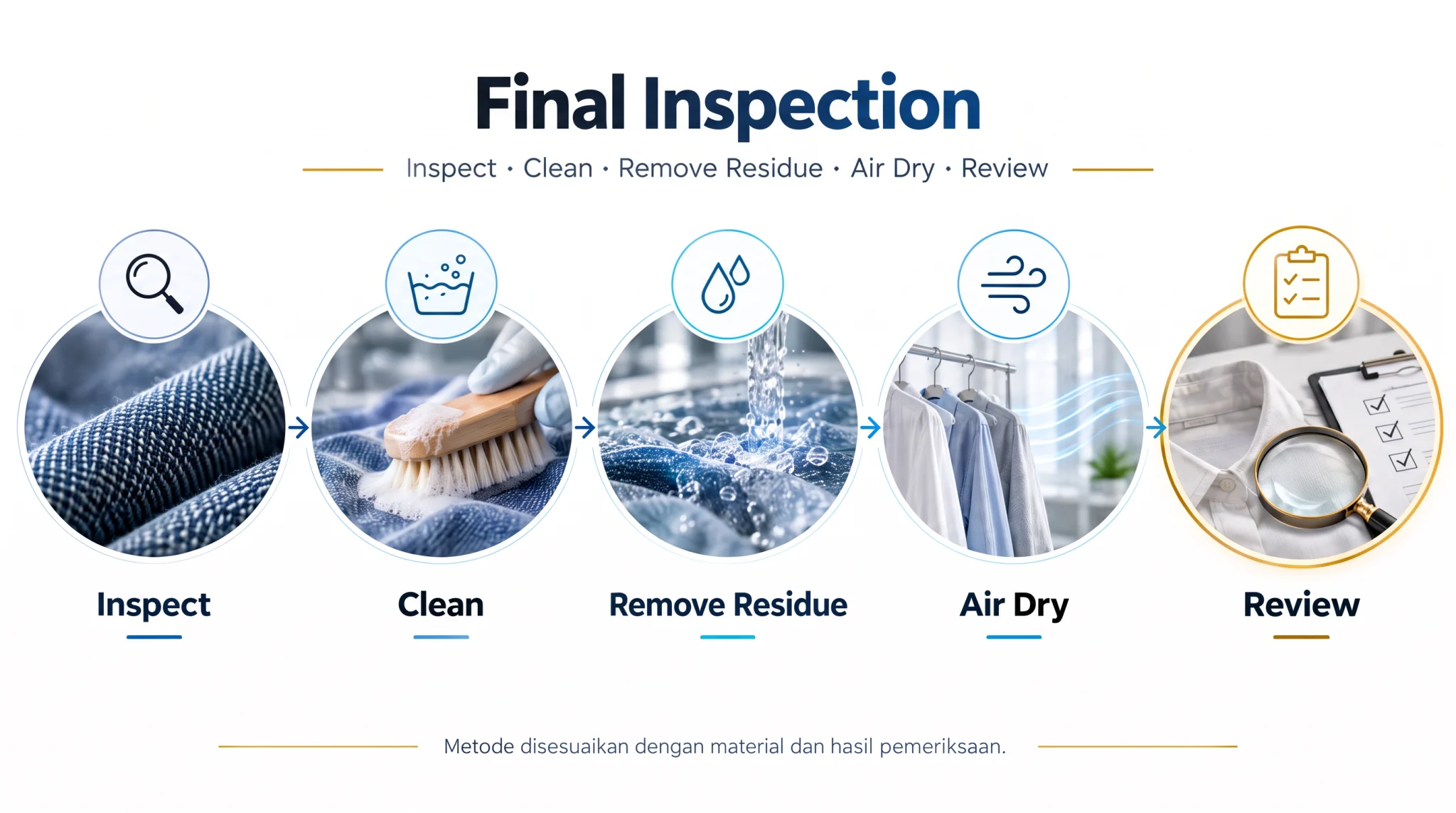
Identification
Familiarize yourself with the primary material, decorative coating, color, and condition of the joints before selecting a liquid or tool.
Test
Use the appropriate product and perform a compatibility test according to the instructions. Stop if the color transfers.
Control
Use a small amount of liquid, apply light pressure, and follow the recommended contact time. Avoid unnecessary soaking.
Dry
Let it air dry naturally in a shaded, well-ventilated area. Avoid direct sunlight and intense heat sources.
Pre- and Post-Treatment Checklist
- The materials and initial conditions have been checked.
- The products used are suitable for the target material.
- The color showed no signs of change during the process.
- Product residue has been removed according to the cleaner’s instructions.
- Do not dry the shoes with direct heat.
- Make sure the shoes are completely dry before wearing or storing them.
- Existing structural damage was documented and not disguised as ordinary stains.
Is Cleaning Shoes at Home Always Safe?
Not always. Home cleaning is usually sufficient for light soiling on stable, well-known materials. The risk increases when shoe owners try to remove stubborn stains by mixing chemicals, applying alcohol to sensitive materials, soaking premium sneakers, or using heat to speed up drying.
If the shoes are high-value, have a complex construction, feature dyes that bleed easily, or show visible damage, the wisest course of action is to stop experimenting and seek an evaluation from a care provider who understands the materials.
Relatively Suitable for Self-Care
- Dry dust that is easy to remove.
- Minor stains on the material, as previously noted.
- Regular care using a brush and products as directed.
- Natural drying in a well-ventilated area.
It Should Be Evaluated First
- Suede or nubuck with stubborn oil stains.
- A white panel that has undergone dye transfer.
- The midsole has turned yellow due to suspected chemical changes.
- Shoes with a strong odor and an interior that remains damp.
- Loose glue, peeling coating, or cracked surface.
How Do You Evaluate the Results of Shoe Care?
When evaluating the results, consider more than just the white appearance or the amount of foam. Check the condition of the surface after the shoes are completely dry, as changes in color and texture may look different while the material is still damp.
| Evaluation Aspects | What to Check | Indications for Follow-Up |
|---|---|---|
| Color | Color consistency and no transfer to other panels | The color spreads, fades, or new spots appear |
| Texture | Fabric, suede, and finishes remain in accordance with the condition of the material | The surface is hardened, sticky, abnormally smooth, or peeling |
| Residue | There is no visible soap film or residue | The surface feels slippery or sticky after it dries |
| Construction | The seams and shape of the shoes remain stable | Open soles, peeling layers, or changes in shape |
| Odor and humidity | The interior is dry and well-ventilated | A lingering odor or moisture returns after storage |
Cleaning results cannot be judged based on a single indicator. Certain stains may not be completely removed without posing additional risks, and the decision to settle for a safe result is often better than pursuing a perfect appearance through aggressive treatment.
FAQ: Frequently Asked Questions About How to Clean Shoes
1. What is the safest way to clean shoes?
Identify the material, remove dry dust, use the appropriate product, perform a compatibility test, limit moisture, and let them air dry. There is no single method that works for all types of shoes.
2. Can dish soap be used on sneakers?
Don’t treat it as a one-size-fits-all solution. Dish soap formulations are designed for different purposes and may not be compatible with dyes, finishes, suede, nubuck, or synthetic leather. Use a cleaner specifically designed for the material whenever possible.
3. Is papaya soap safe to use for cleaning shoes?
Safety cannot be guaranteed based on the product name alone. The pH, surfactants, fragrances, dyes, and additives may vary. Do not use it on sensitive materials without proof of compatibility and appropriate instructions.
4. Can 70% alcohol be used to remove stains?
Alcohol can affect certain dyes, finishes, and coatings. Avoid experimenting on suede, nubuck, leather, and premium multi-material sneakers whose colorfastness is unknown.
5. Is steam cleaning better than regular washing?
Not always. Steam can be helpful for certain applications, but heat and moisture can also damage the material or affect the adhesive. Choose a method based on the material, the manufacturer’s instructions, and the shoe’s construction.
6. Why does suede change color after being cleaned?
Changes may be related to humidity, dye migration, changes in the grain direction, or improper treatment. Stop the process if the color bleeds, and do not try to cover it up with additional chemicals.
7. How do you remove yellow stains from shoe soles?
First, determine whether the yellowing is caused by surface dirt or a change in the material itself. Routine cleaning may remove contaminants, but oxidation or polymer degradation may require specialized restoration, and the material may not always be restored to its original condition.
8. Why do shoes still smell after being washed?
The odor may be caused by moisture and contaminants on the insole or internal foam. Proper drying and inspection of the interior are essential. Persistent odors should be evaluated without promising sterilization or the complete elimination of microorganisms.
9. Can all stubborn stains be removed?
No. Some stains can interact with dyes or materials, while oxidative changes and coating damage are not merely dirt. Any treatment must take into account the risks and realistic outcomes.
10. Where can I ask about shoe care in Surabaya?
You can contact SHELLA Laundry Surabaya to inquire about available care options. Please specify the material, type of stain, and condition of the shoes so that we can assess your needs beforehand.
Further References and Guides
To gain a better understanding of shoe care, follow the manufacturer’s guidelines specific to the material and style of your shoes. The manufacturer’s instructions are more relevant to a specific design than general guidelines that assume all sneakers have the same characteristics.
- Clarks Australia: Shoe Care Guide — General care guide for suede and nubuck materials.
- SAS Shoes: Care Guides — Guidelines based on the type of shoe material.
- Longhi: Caring for Nubuck Leather — a special guide to the characteristics and care of nubuck.
- Read SHELLA's articles and guides — Additional reading on clothing and shoe care.
Follow the care instructions that apply to your specific product. General guidelines do not guarantee compatibility with every variation in materials, finishes, and adhesives.
Take Care of Your Shoes Based on Their Material, Not Just Their Stains
Suede, nubuck, knit, canvas, leather, and premium sneakers each require different care. Before trying any cleaning solutions or heat treatments, familiarize yourself with the materials and the potential risks involved.
Contact SHELLA Laundry Surabaya to inquire about the shoe care services available and to find out if your shoes require a special evaluation.
This educational article is not a substitute for the manufacturer’s instructions, direct evaluation of materials, or product compatibility testing. Cleaning results may vary depending on the condition, age, construction, and maintenance history of the shoes.